

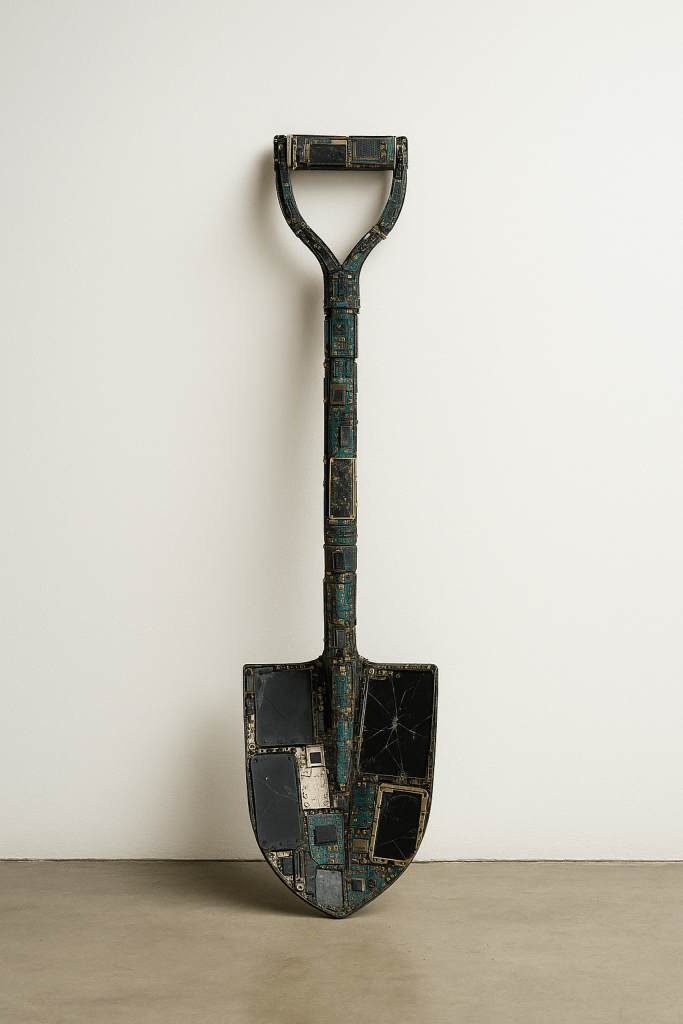
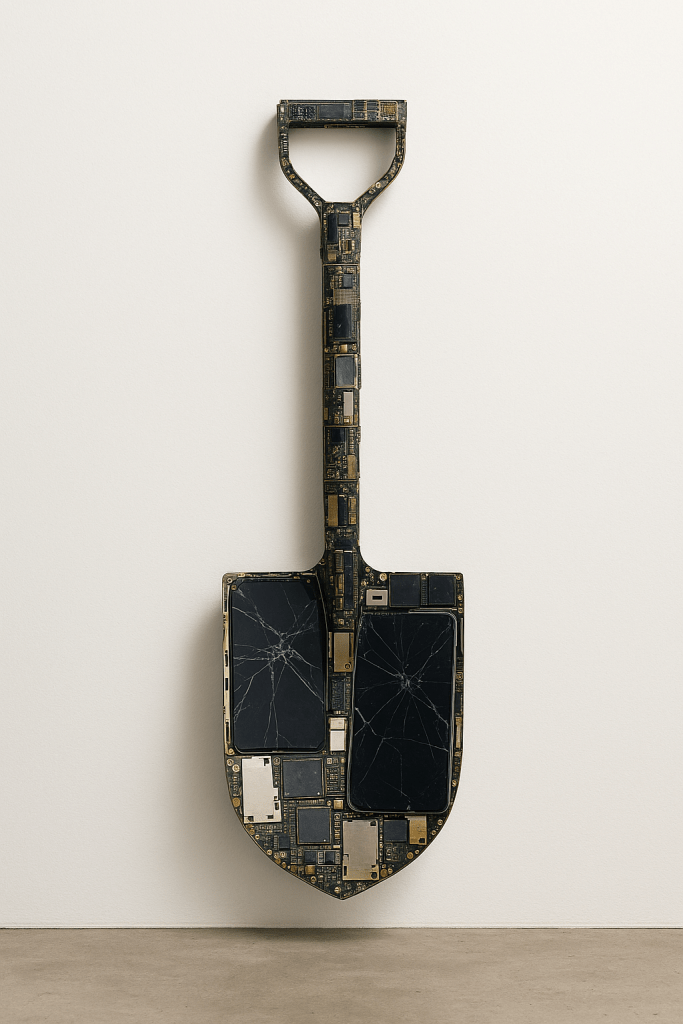
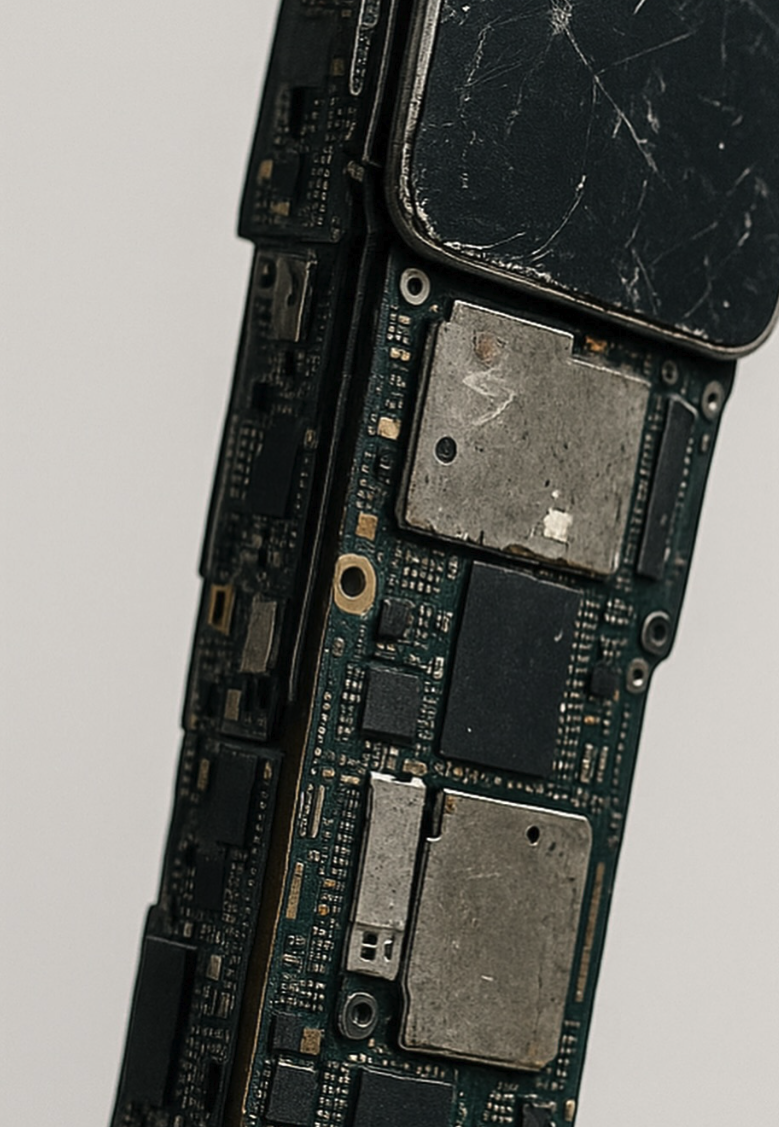
NKONDI, 2025 is a project composed of a series of mining tools created from technological waste such as batteries, fragments of electronic boards, and cell phone casings. These elements bear witness to a process of exploitation that begins in the African subsoil and ends in our everyday devices.
Coltan, a rare and indispensable mineral used in the production of capacitors and batteries, is largely extracted in the Democratic Republic of the Congo, where its mining has fueled a widespread and often invisible internal war for decades a genocide still ongoing, known as the Genocost.
The control of the mines has generated parallel powers, armed economies, and systemic violence, causing hundreds of thousands of deaths and the displacement of entire communities.
The project does not aim to establish a competition between tragedies but rather to highlight how some receive sudden media attention and rightful social participation, while others (even more devastating in terms of victims) remain marginalized in the public discourse. This imbalance reveals how collective perception of crises is shaped by geopolitical, economic, and cultural factors that determine their visibility.
Through the assemblage of tools built from the very materials these conflicts produce, NKONDI reveals the circularity of the system: the technological object returns to its mineral origin, becoming a symbol of a global economy founded on the invisibility of violence.
Like the nkisi nkondi of Congolese tradition (ritual instruments imbued with power and justice) these creations act as devices of political memory, material testimonies of a system that continues to dig into both the earth and human bodies.
The project is part of a broader research that has, for years, investigated the mechanisms of information production and the communicative hierarchies through which media power constructs the contemporary imaginary, defining what deserves to be seen and what can remain in the shadows.
© 2025 Fabio Weik / WEIK STUDIO – All rights reserved.




 FABIO WEIK